Evergreen Packaging, a global leader in fiber-based packaging solutions, together with KidsGardening, a national nonprofit creating opportunities for kids to garden, has announced the winners of the 2020 Carton 2 Garden contest. The contest promotes life skills such as creativity, leadership and teamwork by inviting students to work together to build or enhance their school gardens with repurposed milk and juice cartons. Prizes valued at $23,000 are being awarded to 15 schools around the country for their carton garden creations.
The winner categories include a $5,000 grand prize, four $2,000 specialty prizes, and ten $1,000 grade level prizes. The four specialty prize winners are awarded for efforts in these categories: STEM, best incorporation of science, technology, engineering and math learning in their project; Environmental Stewardship, the best demonstration of sustainable practices and environmental awareness in their garden creation; Health and Nutrition Education, the best incorporation of lessons on healthy eating and lifestyle behaviors in their project; and Carton Art in the Garden, the best display of garden-inspired carton art in a garden creation.
The Carton 2 Garden student competitions started in 2015. Participants have come from 46 different states. Since its launch, nearly 1,000 project entries have been judged and more than 76,000 students have participated. The result is that nearly 392,000 cartons have been repurposed.
“This year, like each of the five prior years, the students across the country demonstrated remarkable levels of creativity and thinking for their projects,” said Katie Simmons, Marketing Director for Evergreen Packaging. “Whether they are kindergarten students working on perhaps their first group projects as students or high school students with years of project experience, they each embrace the ideas of eco-friendly packaging and practices, and the impact on their environment. These children and young adults are role models for environmental stewardship in their communities, neighborhoods and schools.”
The grand prize and specialty prize winners of the contest are as follows:
• Grand Prize Winner – Thomaston Grammar School in Thomaston, Maine
• TEM Winner – New Mountain Hill Elementary in Fortson, Georgia
• Environmental Stewardship Award Winner – Lucy T. Davis Elementary School in Florence, South Carolina
• Health and Nutrition Education Winner – Virgil Mills Elementary in Ellenton, Florida.
• Carton Art in the Garden Winner – Dunham Elementary School in Petaluma, California. Each entry is judged on specific criteria, including cre-
ativity, incorporation of sustainable materials and visual representation. Classroom groups were required to repurpose at least 100 cartons of any size in their creation, including cartons from the school cafeteria or from home. All entries were judged by the education specialists at KidsGardening.
“The truth is, it was a difficult year for teachers and students alike and we weren’t sure whether many schools would be able to participate in this contest,” says Em Shipman, Executive Director of KidsGardening. “But we saw folks come through in a way unlike ever before. The ingenuity and passion these teams put into their projects was astounding. Participating in Carton 2 Garden allowed them to be a part of a meaningful community-focused project at a time when we’re all feeling a bit off-balance and distant.”
Ten additional schools from across the country were recognized for their carton garden creations. visit www.carton2garden.com for more details and a complete listing of the winners.
Evergreen Packaging’s products are manufactured in facilities in the U.S., Asia, Central America and the Middle East/North Africa. Visit www.evergreenpackaging.com. Join a team recognized for leadership, innovation and diversity. WSA USA, LLC is seeking a senior project manager to join our growing team based out of the Blue Ash, Ohio, office. In this role, the Senior Project Manager will effectively supply project planning, fiscal responsibility and is the central point of communication to the customer. The Project Manager provides leadership of the project team covering the planning and coordination, scheduling, financial and cost management, contract administration and customer communications, deliverables and relationships of an assigned project. They are highly organized with an understanding of all aspects of material handling projects.
• A Bachelor’s degree in Engineering, Construction Management or a Business discipline
• A minimum of 5 years technical experience with project management functions
• Comprehensive computer application skills – Microsoft Office including Microsoft Project
• Exceptional communication and relationship building skills
• Cross functional team management experience
• Manufacturing, corrugated and/or material handling experience highly desirable
• The ability to travel a maximum 50%
For more information or to submit a resume for this position, write to Recruiting@wsa-usa.com.
Board Converting News continues its traditional feature with three more of the continent’s independent converters as they recap the tumultuous year that was 2020 and look forward to the possibilities of 2021. Despite the profound business and societal impact of the pandemic, which was felt by virtually every manufacturer in the world, the converters here, like their fellow box makers did in these pages a week ago, have reinforced the obvious fact that it is a good time to be in the box business. They have shared their business strategies, the occasional political analysis and their forecasts on the future of the corrugated and folding carton industries. They have also raised questions – and provided some answers – for the year that will be 2021:
Kruger Packaging
Montreal, Quebec, Canada: Serge Desgagnes reports, “Have you ever woken up in the middle of the night in a panic and unsure of your surroundings? Maybe you’re still dreaming? Maybe this isn’t real and you’re still sleeping? That’s what this past year has felt like. A peaceful sleep one night and complete frenzy and uncertainty the next morning.
Serge Desgagnes
“Prediction and forecasts for 2020 could not have been more inaccurate as the market did a complete 180 in contrast to what the researchers said. An independent box plant survey was taken from April 27th – May 8th, 2020, to gauge the market opinion from industry experts. I must warn you, the initial predictions were quite frightening. Demand growth expectations for box supply in Q2 and Q3 were… down 6.7 percent. From those who took the survey, 71 percent expected the price to decrease in 2020, 67 percent expected the next price increase to be after 2021 along with 84 percent believing box demand would get worse over the next 6-12 months. Not the most uplifting and hopeful predictions coming into the year.
“Here are a couple more forecasted statistics that might surprise you. After Q1, RISI Pulp and Paper Week published box shipments to be up 3.8 percent, while PPM predicted overall box shipments for 2020 to be down 2.92 percent. After 11 months at the end of November 2020, box shipments were up 2.7 percent, which is much better than the forecasted 2.92 percent. Not only were we expecting a significant decrease in box demand, PPM forecasted a $30 short ton price decrease in 2020, which was far from the $50 price increase we incurred.
“Prior to the surge in demand, FBA released April numbers, which indicated box shipments to be down 2.1 percent and inventories up 145,200 short tons. Mills were even shutting down due to a lack of orders, almost hard to believe given the current market condition. This past year was quite the turnaround considering the initial expectations from the entire industry, which can only reinforce the meaning of the word ‘expectations’ as it can be far from reality.
“This will lead me into my next topic, which is the million-dollar question everyone wants to know: what will happen to the corrugated industry in 2021?
“As previously stated, predictions and forecasts can be helpful, but at times inaccurate, so I will offer my market insights given the information I have at my disposal. More supply will hit the market in 2021, beginning with the start-up of several machines, including IP’s Riverdale conversion (450,000t), New-Indy’s Catawba (400,000t), Green Bay Packaging (445,000t) and McKinley Paper’s Port Angeles (180,000t) to name a few. Overall, there will be an additional two million tons added to the market, which will alleviate the pressure on demand. Will demand remain strong or weaken while these additional tons are added?
“We believe the box demand will remain strong through the first half of 2021 due to the increase demand in e-commerce and home food deliveries, among other reasons. Unfortunately, the coronavirus is not going anywhere anytime soon, which is forcing restaurants and businesses to close their stores and redirect customers to shop solely on their online platforms. All use boxes to ship their products, which will force demand to remain strong.
“The North American market also remains extremely attractive for foreign countries and I believe more capacity will flood our market over the second half of 2021. It is also important to recognize the advancements in our industry, starting with numerous investments in state-of-the-art box plants and the addition of high-tech corrugators, flexo machines and digital printing machines. These technological improvements help reduce costs, eliminate waste and improve efficiencies.
“To conclude, 2020 was an anomaly due to the pandemic, which threw all predictions out the window. My 2021 prediction will be that the first half of the year will remain very tight, with demand continuing at an all-time high. The second half of the year will see an increase supply from domestic capacity and foreign suppliers. The corrugated industry might be considered an ‘older’ industry without the flash that other businesses have, however, throughout the years this seems to have changed. Increased investment in technological advancements along with an emphasis on reducing plastic to improve the environmental impact, the corrugated industry has turned into the perfect alternative to satisfy consumer needs. If you don’t believe me, take a drive around your neighborhood on recycling day. I’m sure you will enjoy seeing the mountains of boxes.”
RUSKEN PACKAGING INC.
Cullman, Alabama: Rusken Packaging reports, “While 2020 has been a tumultuous year, full of uncertainties and shifts in demands, one thing is for certain: eCommerce packaging is more important than ever. Prior to the pandemic, eCommerce sales were predicted to rapidly increase over 35 percent by the year 2023, according to a statista report. Today, this market shift has accelerated even more. Many organizations are pivoting to a direct-to-consumer model and will continue to adapt to this changing market for the foreseeable future.
“As eCommerce sales replace the traditional brick and mortar retail experience, the product packaging and unboxing experience is, in many ways, the new storefront and provides a unique way of connecting with the end consumer. And within the online retail packaging sector, corrugated packaging is expected to account for over 80 percent of the market, according to PMMI. Not only does corrugated offer a reliable, sustainable, and cost-effective way of delivering products, the customization opportunities are vast.
“With eCommerce top of mind, Rusken Packaging, Inc. (Rusken) has continued to invest in its capabilities to best serve the needs of their customers. A significant portion of these investments have been machine additions at several of our facilities, including two new K&L machines at our Cullman, Alabama, headquarters and Harrisburg, Arkansas, location. With custom printing and branding a focus for many with eCommerce packaging, these machines enhancements provide the Rusken team with optimal capabilities, printing both inside and out, and ultimately adding efficiencies for their customers.
“Additionally, the packaging design and prototyping phase has become more critical to meet eCommerce packaging needs, as designing the ultimate unboxing experience, including custom messaging, is a top priority. Rusken has invested in the collaborative design approach with enhanced 3D and graphic design software capabilities as a one-stop shop for this process. The ability to collaborate with customers to create a package design that fits around products, limits waste, and provides optimal branding is an extremely exciting and rewarding aspect for the design and sales teams. Seeing an initial idea come to fruition and ultimately run and ship with success, is something the Rusken team is continually investing in to meet increasing demands.
“In recent months, Rusken has also established a new online Custom Design Tool (rusken.com/start-designing) that allows prospective, new, and existing customers the ability to create their own design to begin this collaborative phase with sales and design.
“With a surge in demand for both eCommerce retail and corrugated packaging in 2020, Rusken has invested in new locations, as well as increased capacity at existing facilities across the southeast to better service our customers. These additions include new warehouse locations in Charlotte, North Carolina, and Lafayette, Louisiana; a 25,000-square-foot expansion in Clarksville, Tennessee; and a new facility transition in Conyers, Georgia over the past year. The additional floor space and increased footprint will allow for additional services for existing markets through JIT Warehousing and kitting operations, as well as service to new markets.
“Through an unforeseen year of 2020, Rusken has kept service to new and existing customers at the forefront with recent investments and will continue to adapt in the new year.”
VOLK PACKAGING
Biddeford, Maine: Derek Volk reports, “It was the best of times; it was the worst of times. It was a remarkable year. This past year has cycled from good to bad and back again so many times it makes my head spin to think about it. Like most people, I still struggle to define 2020, but am relieved it is over!
Derek Volk
“Let me begin with a little background. Heading into 2020, Volk Packaging Corporation, a 54-year-old third-generation, family-owned and operated sheet plant in Maine was on a positive trajectory of 11 straight years of sales growth. We had rarely discussed our streak until January of this year, when I decided to challenge my sales team to make it 12. I even distributed tee shirts to seal the deal. Less than four months later we were wondering if we would even be open by the end of the year. No one knew where a worldwide pandemic was going to lead.
“I am sure many of BCN’s readers can agree that 2020 was an interesting and exhausting year for all box plants. The year started off with a bang as our first quarter destroyed all records for January, February, and March. Then April and its economic shutdowns rocked us hard. A dismal May followed. We began considering significant cuts and even a restructuring of our business. However, to our pleasant surprise, June was a big improvement, July the same and in August we were flat compared to 2019. At the end of August, I promised my anxious banker that we would be ahead of our 2019 numbers by the end of the year and deliver yet another year of growth. I am certain that he saw our sales at that time and thought I had lost my mind. Fortunately, rather than recommend that the bank pull our loans, he simply replied, ‘Well, if you can pull that off, it would be a remarkable accomplishment.’
“With tourist-dependent businesses beginning to fail all around us, little relief from the pandemic in sight and an unpredictable political landscape, I took his statement as a challenge. I then used it to motivate my amazing team.
“Like a miracle, September was very strong. October was the biggest month in our history. Somehow, our 4th quarter was the biggest in over a half century. We finished the year about four percent ahead of 2019 and with a very comfortable profit. My banker nailed it: It was remarkable.
“I normally spend quite a bit of time away from the office. As president and sole owner of the company, I am rarely away from work for more than a week, but I like to travel. I am actually writing this from Costa Rica. Between a sales team of 10 that I still manage, a search for new machinery (more on that later), a daughter who plays D1 softball, another who is a world class competitive cheerleader, a son I travel with speaking at autism conferences around the country, and a wife that I really enjoy spending time with, I have not been in the office five days in a row very often in my 30-year career. Like so many things in our lives, COVID-19 changed that, and other than a few brief trips, I was in the office every day in 2020. However, it did not take long to realize that my presence both in the office and the plant was paramount during a worldwide pandemic that was constantly bringing more and more uncertainty to our business. Decisions about how best to adapt and cope needed to be made on a near-hourly basis, it seemed. Additionally, I felt it was extremely important for me to project confidence while keeping my employees informed on those changes and the rationale behind them.
“Amidst all the craziness, Volk Packaging was anxiously awaiting a brand new JS Machine 1228, high-speed, quick set-up, 4-color, 50-inch flexo folder gluer with a die-cut station. When the whole world shut down a month before our machine was due to ship, we were disappointed. However, we understood that the entire planet was facing something much more serious than a delayed flexo. Once the country began opening again, the machine arrived and has already been a huge asset. We are so impressed with the new flexo and what it will do for us, we have already ordered a JS Machine JSBOT 1628 6-color (4-color outside print, 2-color inside print) 66-inch by 110-inch rotary die cutter which we expect to have operational in late 2021.
“Additionally, we are already working with the JS team to acquire a mini-flexo. These new machines will help us achieve our significant plans for growth. We welcome anyone who is interested to visit our JS Machine equipment. I am sure you will be impressed.
“I am eternally grateful to my incredible co-workers. I believe our team has no rival in the packaging business. I am continually humbled by their diligence and loyalty. And I am confident that 2021 will be the lucky 13th year of consecutive sales growth for Volk Packaging.
“Lastly, I want to congratulate every single associate at Volk Packaging for completing 2020 without a single case of COVID-19, one more remarkable accomplishment in a remarkable year.”
As stated in an article on theverge.com, the fate of cardboard and corrugated boxes in the U.S. rests in the hands of consumers more than it ever has been before. In the past, brick-and-mortar retailers handled much of the leftover packaging from shipments. Malls and grocery stores usually send big bales of used but relatively clean cardboard (folding cartons) and corrugated to recycling programs so that they can be made into new boxes. Now, the rise of e-commerce, which started before the pandemic, has shifted more responsibility onto shoppers to properly dispose of boxes so that they can be recycled. Boxes are piling up on curbsides instead of at retail stores.
The pandemic has only accelerated this shift, which experts expect to continue even after COVID-19 is under control. One of the largest waste collection companies in the US, Republic Services, saw as much as a 25 percent increase in waste it picked up from households last year — after the volume it picked up from commercial customers dropped by up to 30 percent when pandemic-induced lockdowns began. The company says it’s even had to change its equipment so that it can capture smaller boxes from e-commerce in addition to the larger packaging used to send goods to stores. When paper based packaging winds up at a person’s house instead of at a store, there’s a bigger chance that it could be tossed in the trash or otherwise become too dirty to recycle. “The concern is that when you have more [cardboard] transitioning to the home, it becomes more of an individual choice for consumers whether they recycle it,” says Rachel Kenyon, Senior Vice President at the Fibre Box Association, a trade group representing packaging manufacturers. “We really want to encourage consumers to recycle because we do need that fiber back. It does help make another box again.”
The corrugated cardboard used to ship the things people buy in stores and online is remarkably salvageable. Virgin cardboard can be recycled to make more of the same material up to seven times. Once the fiber degrades, it can be used to make paperboard, which is used in things like cereal boxes. The average box now contains about 50 percent recycled material, according to Kenyon.
Recycling is no substitute for cutting down on waste in the first place, and online retailer behemoths still have a lot of work to do on that front. But cardboard has a much higher recycling rate compared to other packaging materials. The overall recycling rate for materials, including paper, glass, and plastics, in the US was about 32 percent in 2018, according to the Environmental Protection Agency. The recycling rate for cardboard boxes, on the other hand, has hovered close to 90 percent since 2011.
To keep those rates high, the cardboard industry will need shoppers to recycle the increasing number of boxes from the record amounts of box shipments made during the pandemic, according to Kenyon. By last November, the containerboard packaging industry saw a 3.6 increase in production, according to the American Forest & Paper Association.
In the past couple of years, new paper mills have already come online, and others are on the way. The demand for more boxes — fueled by a pandemic-driven boom in e-commerce — is also helping once-struggling recycling programs stay afloat.
Whether you are looking for quick, concise videos that address specific corrugated packaging machinery components or want to dive into a self-guided course that not only answers the question of how, but also why—then look no further than TAPPI Academy eLearning.
TAPPI Academy online courses help you succeed in building a solid foundation for your individual or company’s future by providing flexible, on-demand learning opportunities that allow you to train your way. Online Training is available for individual users as well as company licenses. Choose to purchase a complete course or a specific topical course module.
The Corrugated Packaging – Box Plant Basics course includes ten modules and covers equipment, materials, and processes. Best of all, the individual modules can be purchased separately so you can quickly and easily address your specific area of interest.
TAPPI has partnered with The Packaging School (TPS) to offer online education to members. Learn more about The Packaging School courses at tappi.org/packagingschool. Learn more about TAPPI online courses at www.tappi.org/basics. Have multiple team members who could benefit from our content? Consider a company license Contact training@tappi.org to get your team started.
AICC, The Independent Packaging Association, has opened registration for “Why You Need to Re-Onboard Every Single Employee” Now, a new webinar, to be held Wednesday, January 27, at 2:00 p.m. EST with Ben Baker, President, Your Brand Marketing.
2020 did not go as expected. The carefully crafted business plans of most companies need to be looked at again, with a new lens for 2021. Employees need to understand the new goals, expectations, and processes. This webinar will help attendees understand how to articulate the changes and challenges to employees, get them on track, and have the company headed for success.
Ben Baker has been helping companies, and the people within them understand, codify, and communicate their unique value to others for nearly a quarter of a century.
Baker is the president of Your Brand Marketing, an Employee Engagement Consultancy, author of “Powerful Personal Brands: A Hands-On Guide to Understanding Yours,” and “Leading Beyond a Crisis: A Conversation About What’s Next,” and the host of IHEART and Spotify syndicated YourLIVINGBrand.live show with more than 170 episodes behind him. He believes that if companies understand and build cultures around their purpose, employees will engage, stay, and want to grow with the company.
Attendees will learn from the experience of this exceptional speaker. Registration for Why You Need to Re-Onboard Every Single Employee Now is free to All Access Pass holders, $250 for AICC members and $500 for non-members.
AICC members lower training costs with the All Access Pass. For one payment of $1,695, participating companies are given a code that all employees can use to register for every webinar scheduled through August 2021. Each company also receives a recording of each webinar. With new webinars scheduled and over 50 recordings available, the All Access Pass represents a value of $12,500. Learn more at www.AICCbox.org/Pass.
Memphis, Tennessee based International Paper (IP) last week declared a quarterly dividend of $0.5125 per share for the period from January 1, 2021, to March 31, 2021, inclusive, on its common stock, par value $1.00. This dividend is payable on March 15, 2021, to holders of record at the close of business on February 18, 2021.
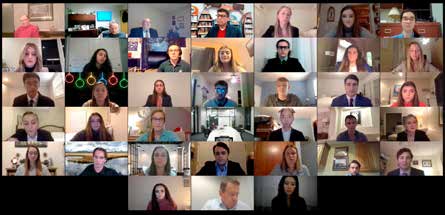
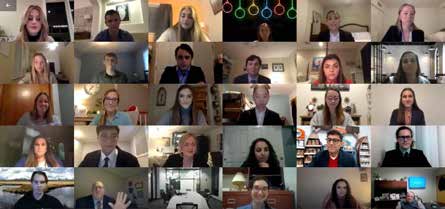
In response to the coronavirus pandemic, the International Corrugated Packaging Foundation (ICPF) has taken its ongoing Student /Executive Dialogue Dinner Series to a virtual platform. The first ICPF virtual dialogue dinner was conducted on December 16, 2020, when more than 35 students from 10 universities across the country — with education and interest in packaging engineering & production, sales, packaging design, graphic design, chemical engineering, supply chain management and related fields — participated. The students were joined by corrugated packaging executives from five ICPF corporate partners that included Green Bay Packaging, Hood Container Corporation, Packaging Corporation of America (PCA), Pratt Industries and WestRock.
Students from 10 universities across the country participated in the virtual dialogue dinner on December 16, 2020. Their resumes, along with over 100 additional active resumes, are accessible to ICPF Corporate Partners by visiting the ICPF career portals resume bank at www.careersincorrugated.org.
ICPF’s dialogue dinners are directed towards enabling top students, who already have interest in corrugated packaging, to learn more about the industry and its operations. Many of the participating students in each of the eight past years were recruited for internships and full time positions through the company contacts they made during the dialogues and through referral to ICPF’s Career Portal. For those ICPF Corporate Partners that have not posted 2021 openings, it’s not too late. Over 100 additional student and upcoming graduate resumes are posted on the portal, as well.
ICPF’s Virtual Student/Executive Dialogue Dinner series is one of several new programs initiated by ICPF to expand its outreach during COVID-19. In early 2020, ICPF worked with colleges and universities to assist them in utilizing ICPF’s online corrugated packaging curricula as campuses around 12 January 18, 2021 the country adjusted to set up distance learning capability. Additionally, ICPF reached out to Arden and Esko to develop the capability for students to access design software remotely. Licensing previously required students to utilize Impact and Artios software directly from the computers located in the design labs on each campus.
This past summer, ICPF established a student advisory board that meets up to twice a month. The student advisors have provided valued input on the establishment of the virtual dialogue dinners and plans for converting ICPF’s annual Teleconference on the Business of Corrugated Packaging & Displays Careers to a virtual format later this quarter. Over 500 students from 20 campuses have participated in the teleconference annually.
The student advisory board has also been helpful in this year’s expansion of ICPF’s program to identify and recruit ICPF student representatives on each university campus. Members assisted in ICPF’s launch of a new industry mentoring program for students who are seeking internships and full time positions due to the earlier reduction in the industry’s 2020 openings because of COVID-19.
Most recently, ICPF’s new student program manager intern worked to identify available 2020 – 2021 scholarships for packaging students whose families may have been financially impacted by COVID-19. This work prompted several scholarship programs to provide additional funding to reopen or extend application deadlines.
The PMMI Foundation and Enercon Industries Corporation have selected Max Klein, a junior packaging engineering student at Indiana State University, as the recipient of the 2020 Bill Zito Scholarship. The scholarship was established to honor Packaging Hall of Famer and longtime Enercon employee, Bill Zito, who strongly believed in the importance of education in the packaging field.
Awarded to students in their junior year at a PMMI Education Partner school who major in packaging engineering or a related field, candidates must show interest in the packaging industry and have excellent academic achievement.
“We are pleased to contribute to the education of tomorrow’s packaging leaders with Enercon’s Bill Zito Scholarship. Bill earned a place in the Packaging Hall of Fame for his commitment to advancing induction cap sealing technology and educating the industry on the technology’s benefits,” said Mark Plantier, Vice President, Marketing, Enercon. “We’re proud to carry on the tradition of supporting packaging education opportunities.”
Enercon is a longtime PMMI member and supplies induction cap sealers, corona treaters and plasma surface treaters.
Each year, the PMMI Foundation provides over $200,000 in scholarships to students attending a PMMI Education Partner school. These scholarships underscore PMMI’s commitment to the future of the packaging scholarships to students majoring in packaging. Students must currently attend a PMMI Education Partner school to be eligible for PMMI Foundation scholarships. Visit www.pmmi.org/scholarships for more information on the PMMI Foundation.
When Huston Patterson chose to invest in a new 8-color Koenig & Bauer Rapida 164, its management team, led by Tonya Kowa-Morelli, saw the potential of being the only printer among its competitors with this specific large-format configuration.
The Decatur, Illinois based packaging printer gave its sales team the advantage to sell jobs designed for a 64- inch 8-color press with the option of UV or AQ coating. Since the installation at its 110,000-square-foot facility, the company is producing top quality color critical packaging that can be found up and down the aisles of any retailer, such as Walmart and Amazon.
Operating 24/7, Huston Patterson’s new Rapida 64- inch press is in full production along with its Rapida 56- inch 6-color press. “These are our go-to presses,” says Tonya Kowa-Morelli, President of Huston Patterson. “But the new Rapida 164 has the speed, automation and color control features that can produce more efficiently for our higher-end color critical work. Our internal tracking system tells us that the new Rapida is giving us 15 percent faster speeds and has reduced our makeready in half. In particular, Koenig & Bauer’s color management system with internal camera allows us to excel at efficiently matching color and producing jobs built with five, six, seven or more PMS colors. We have to meet the demands of our clients and the Koenig & Bauer color management system ensures we exceed their expectations.”
From left, Tom Kowa, Zachary Kowa, Joe Morelli and Tonya Kowa-Morelli of Huston Patterson.
Kowa-Morelli is grateful that they already had the new press in operation before 2020 hit. As a business owner, she acknowledges that it’s been a challenging year, yet she proudly notes that the month of September has been the company’s best in its history and sales have been growing during the past three months, along with ten new customers, all on board virtually. During the spring when most printers were affected by the pandemic, Huston Patterson saw an increase in its consumable goods and pharmaceutical packaging, specifically the quick production of thousands of much-needed COVID-19 test kits.
“The start-up of this new Koenig & Bauer press was our most exciting,” she says. “We’ve had four previous Rapida press installations, but you could just see the massive speed, all of its new technology, and computerization. Our new Rapida 164 has certainly surpassed our expectations. We’ve formed a strong alliance with Koenig & Bauer over the years, which has maximized our company’s growth over the three generations of our family’s ownership of the business.”
The U.S. economy jumped 33.4 percent at the annual rate in the third quarter, the largest increase in the history of the series, which dates to 1947, according to Chad Moutray, Ph.D. and Chief Economist at the National Association of Manufacturers. Despite soaring in the third quarter, real GDP remained down 3.4 percent year to date. The forecast for growth in the fourth (or current) quarter is 6.0 percent, with 4.5 percent growth anticipated for 2021. Real value-added output in the manufacturing sector rose to $2.213 trillion in the third quarter, as expressed in chained 2012 dollars. It remained down 1.0 percent from the all-time high recorded in the fourth quarter of 2019 ($2.236 trillion), despite tremendous volatility year-to-date. Overall, manufacturing accounted for 11.0 percent of real GDP in the third quarter, with value-added output (in nominal terms) up to $2.329 trillion, just 1.7 percent from a record high. In the latest NAM Manufacturers’ Outlook Survey, 74.2% of respondents were either somewhat or very positive about the outlook for their company. It represented notable improvement after the 33.9 percent and 66.0 percent readings in the second and third quarters. Just over 29 percent of manufacturers said that their revenues will have recovered either before or during the fourth quarter, and 67.7 percent anticipate that their revenues will be back to pre-pandemic levels by the end of 2021. After two quarters with weaker domestic demand topping the list of primary business challenges, the inability to attract and retain talent led the pack once again in the fourth quarter.
Chad Moutray
New orders for durable goods rose 0.9 percent in November, rising for the seventh straight month. Overall, the durable goods manufacturing sector has bounced back soundly following steep declines in March and April due to the COVID-19 pandemic. On a year-over-year basis, new durable goods orders have grown by 3.8 percent since November 2019.
In last week’s releases for December, the Conference Board and the University of Michigan provided mixed news on consumer confidence. However, Americans were cautiously upbeat in their outlook, despite assessments of the economy being well below levels seen before the pandemic.
Personal consumption expenditures declined 0.4 percent in November, falling for the first time since April. The savings rate remained elevated at 12.9 percent. These data suggest that Americans were more hesitant in their consumer spending in November— something that will not be welcome news for retailers heading into the holiday season. Over the past 12 months, personal spending has fallen 1.3 percent since November 2019, largely on reduced spending for services.
Meanwhile, personal income fell 1.1 percent in November, but it has risen by 3.8 percent year-over-year. Manufacturing wages and salaries increased to $955.2 billion in November, with 3.7 percent growth over the past 12 months. The housing market continued to be a bright spot, buoyed by historically low mortgage rates. However, inventories remain very low, pushing prices higher.
Stay informed
Get BCN in your inbox.
News, plant stories, industry insights and more - delivered to your inbox.
Reach a specialized audience
Advertise with BCN.
Connect with decision-makers in the corrugated and converting industry.